If you're a Brit eyeing Cayman, you're in good company. The islands run on British habits: driving on the left, tea at the office, cricket on the telly, and a legal system built on English common law. But the move is not as simple as swapping one grey November for a sunny one. This guide covers what UK movers actually need to plan for, from visas and money to housing and the small cultural shocks.
One note before we start. Immigration rules and fees change, so always confirm current requirements with the Cayman Islands government and a qualified immigration lawyer before you commit.
Why UK Residents Move to Cayman
The reasons are usually a mix of the same few things:
- No income tax. No payroll tax on your salary, no capital gains tax, no inheritance tax. For a UK professional used to a heavy PAYE bill, this is the headline draw.
- Familiar systems. English common law, British-style schools, and a population that understands your accent and your humour.
- Climate. Warm year-round, with a rainy and hurricane-prone season from roughly June to November.
- Career demand. Financial services, law, accounting, funds, insurance, healthcare, construction and hospitality all recruit heavily from the UK.
- Safety and infrastructure. Modern healthcare, reliable utilities and a generally low-crime environment.
The population is about 90,600 (official December 2025 figure) and growing roughly 2% a year. That growth is great for the job market and property values, but it also means housing is tight in popular areas.
Post-Brexit: What Actually Changed
Brexit had little direct effect on Cayman, because Cayman was never in the EU. As a British Overseas Territory, it has its own immigration system. Holding a British passport does not give you an automatic right to live or work here.
That surprises many people. A UK citizen needs the same permission to work in Cayman as someone from Canada or the US. In practice, that usually means:
- A job offer from a Cayman employer who sponsors a work permit
- Or another approved residency route
Where Brexit has mattered is indirect. Some UK professionals who once looked at Europe now look further afield, and Cayman's finance sector has seen steady interest from London. If you want more detail on the rules, read our Cayman immigration rules guide for property buyers.
Getting Permission to Live and Work
Most UK arrivals come on an employer-sponsored work permit. The typical flow looks like this:
- You secure a job offer from a Cayman-based employer.
- The employer applies for your work permit, usually including advertising the role locally first.
- Processing takes weeks to a few months, so build that timeline into your notice period.
- Once approved, you arrive, complete any medical or documentation steps, and start work.
Your dependants (spouse and children) are generally included in the application. Confirm their status early, because it affects school places and your spouse's ability to work.
If you are self-employed or retiring, the routes are different and usually require demonstrating substantial financial means. Speak to an immigration lawyer before making any property commitment tied to your status.
What Your Money Does: Currency and Costs
The Cayman Islands Dollar (CI$) is pegged at CI$1 = US$1.20. Many prices, especially property, are quoted in US dollars, and day-to-day life runs on both. For a UK mover, the pound-to-dollar rate matters more than the CI$ rate, so watch GBP/USD when timing transfers.
A realistic picture of the cost of living:
- Groceries are expensive because almost everything is imported. Expect to pay noticeably more than in the UK for the same basket; our Cayman grocery costs guide has real monthly numbers.
- Electricity is costly, and air conditioning drives bills up in summer.
- Fuel is not cheap, and you will need a car in most districts.
- Dining out is pricey, particularly on Seven Mile Beach.
- Health insurance is typically provided by employers, but check the coverage level. Our Cayman health insurance guide explains how it works.
The trade-off is simple: no income tax, higher everyday costs. Most people come out ahead on salary, but not by as much as the "zero tax" headline suggests. Plan on a monthly budget that is higher than your UK one for the same lifestyle.
Renting First: The Smart Move
Nearly every advisor will tell you the same thing: rent before you buy. Spend six to twelve months learning the island.
Long-term residential rentals in Cayman are essentially unregulated. There is no landlord registration scheme, no statutory deposit cap and no statutory notice period. Terms are set by your lease and market norms, so read your lease carefully. Typical practice includes:
- A security deposit, commonly one to two months' rent, but this is negotiated
- First month's rent upfront
- Annual leases are common, with some flexibility for the right tenant
- Utilities and internet usually paid by the tenant
Because there is no tenant tribunal to fall back on, a clear written lease and a sensible landlord relationship matter more than they would in the UK. Use our rent vs buy calculator to see where renting stops making sense for your situation.
Where UK Expats Tend to Settle
Here is how the main areas look, using current listing data. Still deciding? Our guide to which Cayman area fits you matches districts to lifestyles.
Seven Mile Beach and the Corridor
The classic expat address. Seven Mile Beach has 120 active listings averaging $8.59M, with condos averaging $2,279/sqft. The wider Seven Mile Corridor has 248 listings averaging $4.01M, with condos around $1,046/sqft. Walkable, close to restaurants, offices and the beach, but pricey.
Camana Bay and Grand Harbour
Popular with professionals who want a walkable, modern feel. Camana Bay is a master-planned town centre with shops, restaurants and offices. Grand Harbour offers canal-front living at more moderate prices.
George Town
The financial hub, with 405 active listings averaging about $2.0M. Convenient for office workers and close to most services.
South Sound
A quieter, residential coastal district with 170 listings averaging $2.95M. Its condos average roughly $860/sqft, which is much lower than Seven Mile Beach for similar sea views.
Savannah and Prospect
The value belts. Savannah has 261 listings averaging about $931K, making it one of the most accessible districts for a mortgage-based purchase. Prospect has 274 listings averaging about $1.81M, popular with families who want space and school access.
West Bay
The biggest district by listings at 460, averaging about $2.89M, with a wide range from $107K to $30M. Condos here average $1,321/sqft. Good mix of beachfront and local community feel.
East End, North Side and the Sister Islands
East End (213 listings, avg about $975K) and the Sister Islands offer quiet and lower prices. Cayman Brac averages about $518K and Little Cayman about $678K. Great for a slower life, but fewer amenities and jobs.
The key takeaway: with 3,390 active listings island-wide, buyers have real choice. Browse everything on the ListCayman homepage and check market data to see how each district compares.
Buying Property as a UK Mover
Once you have your status sorted and a few months of local knowledge, buying is straightforward. Foreigners can buy freehold property in Cayman, and there are no restrictions on non-Caymanians owning most residential real estate.
The costs that matter:
- Stamp duty: 7.5% on properties under CI$2 million (about US$2.4M), and 10% on the portion above that. The buyer pays at closing. Caymanian first-time buyers receive a reduced rate, but that does not apply to most UK arrivals.
- Legal fees: Expect a conveyancing lawyer to charge a flat or modest fee. Shop around.
- Insurance: Hurricane cover is effectively essential, and usually runs about 1% to 2% of property value annually.
- Strata fees: For condos, these range from about $400 to $2,000+ per month depending on the building and amenities.
- Annual holding fees: These apply, but there is no recurring property tax like UK council tax.
Run your numbers with the stamp duty calculator and the mortgage calculator before you make an offer.
A quick example
On a CI$600,000 purchase, stamp duty at 7.5% is CI$45,000. That is a big upfront cost that surprises UK buyers used to a tiered Stamp Duty Land Tax system. Budget for it from day one, along with legal fees and your deposit.
Mortgages for UK Expats
Local banks lend to expats, but they will want to see a work permit, a stable employment history and a meaningful deposit. Expect to put down a substantial share of the price, often in the region of 20% to 30% or more, depending on the lender and your profile.
Practical tips:
- Get a mortgage pre-approval before you start serious viewings.
- Gather UK bank statements, payslips and credit history. Local banks may not recognise a UK credit score the way a British lender would.
- Consider whether you want to keep UK assets, such as a house you are renting out, and how that interacts with your UK tax position.
UK Tax: The Part People Forget
Cayman has no income tax, but that does not automatically cut your ties with HMRC. Whether you remain a UK tax resident depends on the UK's Statutory Residence Test, which looks at days spent in the UK, ties and work patterns. UK property income, pensions and some gains can remain taxable in the UK even after you leave.
Before you go, speak to a UK-qualified tax adviser about:
- Your residency status and the split-year rules in the year you leave
- Your UK property, rental income and any gains
- Pension and workplace scheme treatment
- National Insurance contributions, if you want to protect your State Pension record
This is not something to guess at. A single consultation can save thousands.
Schools, Healthcare and Daily Life
Schools. Cayman has public schools and a range of private options, including British-curriculum schools. Places at popular private schools can fill early, and fees are significant (see our Cayman school fees comparison). Apply as soon as your permit is in motion.
Healthcare. Standards are high, with private clinics and hospitals and Health City in East End. Most employers provide health insurance, but check what it covers, especially for dependants and maternity.
Driving. Here is a gift for UK movers: Cayman drives on the left. Both left-hand and right-hand drive vehicles are allowed, so you can ship a car or buy locally without worrying about the steering wheel side. Do check licence conversion rules when you arrive.
Weather and hurricanes. Hurricane season runs roughly June to November. Take it seriously: secure insurance, know your evacuation plan and choose elevated or well-built property where possible.
Culture Shock, UK Edition
It feels familiar, then it doesn't. Things UK movers commonly notice:
- Things move at island pace. Patience is a survival skill.
- Service culture is warm but not always fast.
- Social life revolves around beaches, boats, brunches and charity events.
- It is a small place. You will bump into your landlord, your boss and your accountant at the same restaurant.
- Everything imported costs more, from Marmite to a decent kettle.
Most Brits settle in quickly, particularly if they join clubs, sports teams or community groups early. For more first-hand lessons, read what expats wish they knew before moving to Cayman.
A Simple Move Checklist
- Secure your job offer and confirm your work permit timeline
- Speak to a UK tax adviser about residency and income
- Decide what to ship, sell or store
- Arrange health insurance and check coverage
- Line up short-term accommodation for the first weeks
- Apply for schools early if you have children
- Open a local bank account after arrival
- Plan to rent for six to twelve months before buying
Final Thoughts
Moving from the UK to Cayman is manageable, and thousands of Brits have done it. The biggest risks are not the sun or the sea, but the paperwork, the cost of living and the tax questions you leave behind. Get those right, take your time choosing where to live, and the rest tends to fall into place.
When you are ready to start looking at homes or rentals, explore current listings on ListCayman, or compare our Canada and US moving guides.
Frequently Asked Questions
Do British citizens need a visa to visit the Cayman Islands?
No. British citizens do not need a visa to visit the Cayman Islands. The immigration officer decides how long you can stay when you arrive, and you may be asked for a return or onward ticket and proof of funds. A visitor stay does not let you work.
Can a British citizen live and work in the Cayman Islands?
Not automatically. Cayman runs its own immigration system, so a British passport gives no right to live or work there. Most UK movers come on a work permit that a Cayman employer applies for through WORC, usually after advertising the job locally first.
Do UK expats pay income tax in Cayman?
Cayman has no income tax and no capital gains tax. Leaving the UK does not end UK tax by itself, though: the Statutory Residence Test decides whether you are still UK resident, and UK rental income, pensions and some gains can still be taxed there.
How far is the Cayman Islands from the UK?
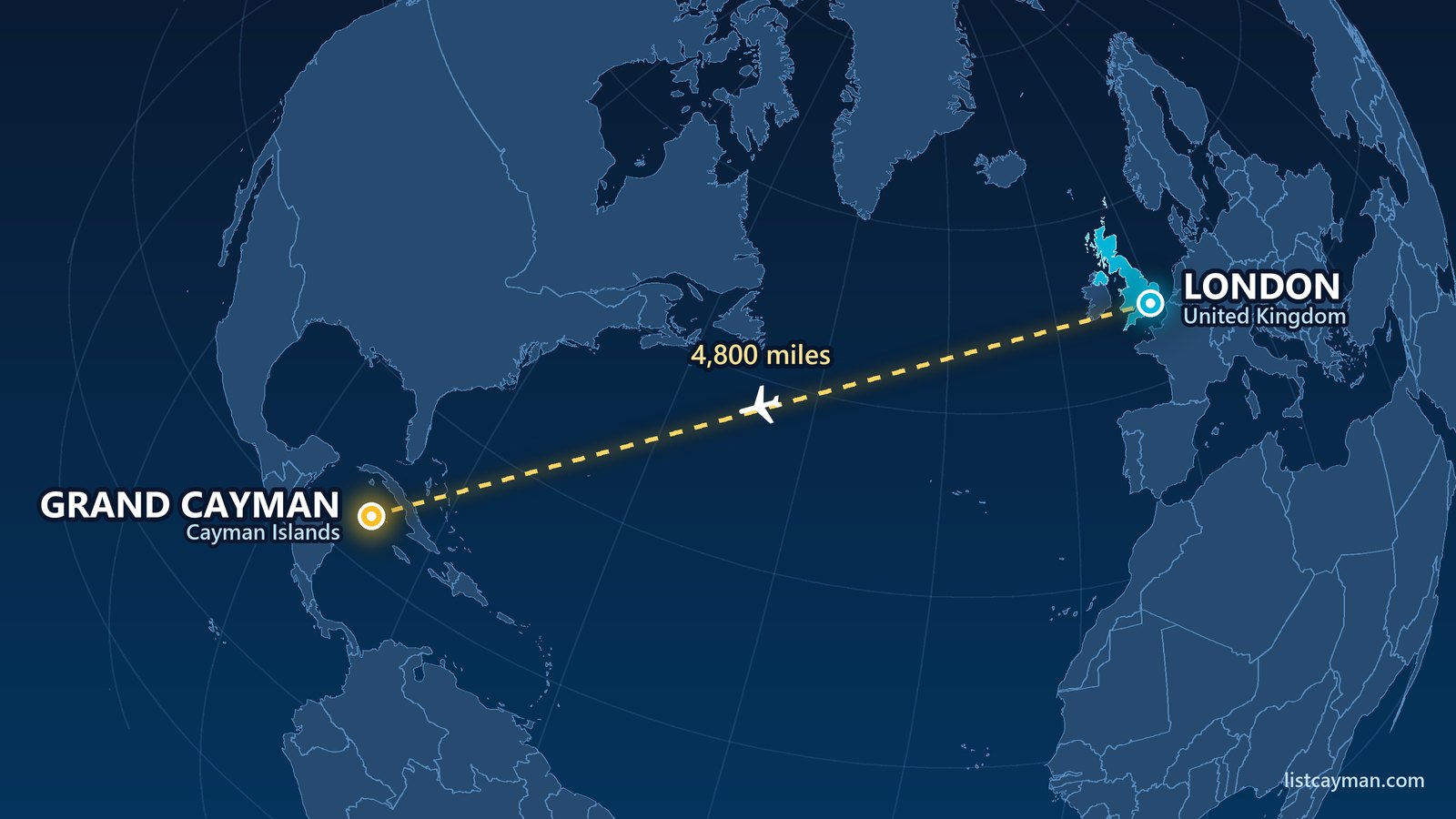
Grand Cayman is about 4,800 miles from London. British Airways flies from London Heathrow to Grand Cayman with a stop in Nassau, and many travellers connect through Miami instead. Check current schedules before you book.
Does Cayman drive on the left like the UK?
Yes. Cayman drives on the left, just like the UK, and both left hand and right hand drive cars are allowed on the road. Check the rules for converting your UK driving licence when you arrive.


